Page 15 of 18 FirstFirst ... 51314151617 ... LastLast
Results 141 to 150 of 180

Thread: OK short quiz.

  1. #141
    Join Date
    Aug 2007
    Location
    Loganlea Qld
    Posts
    1,652
    Total Downloaded
    0
    There is some little controversy on this subject as Daisy Bates was married for a short time to Edmond/edward? Murrant, and some claim that this was the bloke known as Breaker Morant.
    However according to AWM records Breaker Morant claims to be the son of an English Admiral Morant of the time.
    Now a little bit of name changing to cover a murky past or even to enhance a hoped for future was not unthinkable in those early days of Australia, so I guess we will have to say, Breaker Morant.

    One of the unfortunate side effects of today's way of life is that we tend to take a movie maker's romantic attempt to make a movie more socially palatable for an audience, as being historically correct, rather than follow actual factual evidence, and in so doing sway future generation's so called opinions of heroes and/or anti-heroes.
    Many of our modern day sporting "celebrities" are prime examples of this, along with the 'Breaker', 'Ned Kelly' and more recently 'Chopper Reid'.

    Digger, if I were you I would think about an occupation change, as everyone seems to know who Ben Hall was, or who Ned Kelly was, or even Breaker Morant, but no-one remembers the coppers who collared them, or if they do, they mention their names in an entirely different tone of reverence.
    Regards
    Glen

    1962 P5 3 Ltr Coupe (Gwennie)
    1963 2a gunbuggy 112-722 (Onslow) ex 6 RAR
    1964 2a 88" SWB 113 251 (Daisy) ex JTC

    REMLR 226

  2. #142
    Join Date
    Sep 2007
    Location
    RIVERLAND, SOUTH AUSTRALIA
    Posts
    6,740
    Total Downloaded
    0
    Quote Originally Posted by bob10 View Post
    Western Australia. They even had a victory song, The PM of the day, was booed off the stage, when he went to campaign against the referendum proposal. I think it was knocked back in the UK, not sure. Bob


    Land of the vast horizons,
    Land where the reef-gold gleams;
    For chains awaits thee glory,
    Dominion of our dreams.
    We will heal thy wrong
    By a justice strong,
    And our victor song
    ‘Westralia! Westralia! Westralia shall be free’.”
    Correct..

    Independence for WA-

    In April 1933, 68 per cent of West Australians voted in favour of seceding from the Commonwealth of Australia.

    However, they needed permission from the British Parliament before they could officially become a new country. Meanwhile, Australia's Federal Parliament was arguing that Britain should not interfere in Australian politics.

    The end result was that Britain never made a decision. Consequently, Western Australian remained part of the Commonwealth.
    (REMLR 235/MVCA 9) 80" -'49.(RUST), -'50 & '52. (53-parts) 88" -57 s1, -'63 -s2a -GS x 2-"Horrie"-112-769, "Vet"-112-429(-Vietnam-PRE 1ATF '65) ('66, s2a-as UN CIVPOL), Hans '73- s3 109" '56 s1 x2 77- s3 van (gone)& '12- 110

  3. #143
    Join Date
    Sep 2007
    Location
    RIVERLAND, SOUTH AUSTRALIA
    Posts
    6,740
    Total Downloaded
    0
    Quote Originally Posted by zulu Delta 534 View Post
    There is some little controversy on this subject as Daisy Bates was married for a short time to Edmond/edward? Murrant, and some claim that this was the bloke known as Breaker Morant.
    However according to AWM records Breaker Morant claims to be the son of an English Admiral Morant of the time.
    Now a little bit of name changing to cover a murky past or even to enhance a hoped for future was not unthinkable in those early days of Australia, so I guess we will have to say, Breaker Morant.

    One of the unfortunate side effects of today's way of life is that we tend to take a movie maker's romantic attempt to make a movie more socially palatable for an audience, as being historically correct, rather than follow actual factual evidence, and in so doing sway future generation's so called opinions of heroes and/or anti-heroes.
    Many of our modern day sporting "celebrities" are prime examples of this, along with the 'Breaker', 'Ned Kelly' and more recently 'Chopper Reid'.


    Digger, if I were you I would think about an occupation change, as everyone seems to know who Ben Hall was, or who Ned Kelly was, or even Breaker Morant, but no-one remembers the coppers who collared them, or if they do, they mention their names in an entirely different tone of reverence.
    Regards
    Glen
    They still have "breakers bar" at the Renmark Hotel, he worked at a property nearby and reputedly rode his horse into the bar one night before he left.

    As for the other...Yeah true but I can sleep at night (well there are some things from wayback that still cause nightmares but thats part of life isnt it? and covered elsewhere) and hold my head up in front of my kids and kin.. I'll stay as I am thanks!
    (REMLR 235/MVCA 9) 80" -'49.(RUST), -'50 & '52. (53-parts) 88" -57 s1, -'63 -s2a -GS x 2-"Horrie"-112-769, "Vet"-112-429(-Vietnam-PRE 1ATF '65) ('66, s2a-as UN CIVPOL), Hans '73- s3 109" '56 s1 x2 77- s3 van (gone)& '12- 110

  4. #144
    Join Date
    Sep 2007
    Location
    RIVERLAND, SOUTH AUSTRALIA
    Posts
    6,740
    Total Downloaded
    0
    In 1977, Alan Jones scored a surprise victory in the Austrian Grand Prix.

    Initially officials were going to play another anthem but then realised that Australia and the other were not the same country.

    Unfortunately, they didn't have the Australian anthem so instead what was reputedly played during the presentation?
    (REMLR 235/MVCA 9) 80" -'49.(RUST), -'50 & '52. (53-parts) 88" -57 s1, -'63 -s2a -GS x 2-"Horrie"-112-769, "Vet"-112-429(-Vietnam-PRE 1ATF '65) ('66, s2a-as UN CIVPOL), Hans '73- s3 109" '56 s1 x2 77- s3 van (gone)& '12- 110

  5. #145
    Join Date
    May 2010
    Location
    brighton, brisbane
    Posts
    33,853
    Total Downloaded
    0
    [QUOTE=zulu Delta 534;2156819

    Regards
    Glen[/QUOTE]


    Breaker Morant, and Edward Murrant, were one & the same. Morant stretched the truth quite a bit, when it suited him. Bob


    Breaker Morant

    Breaker Morant South Australian History

    Article by Flinders Range Research
    Hero, scapegoat or Rogue?


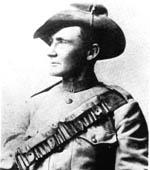
    Born at Bridgwater, England on 9 December 1864, Morant, also known as Harry Harbord Morant or Edwin Henry Murrant, left England on 1 April 1883 aboard the SS Waroonga from Plymouth and arrived in Townsville, Queensland on 5 June 1883. His background is still somewhat of a mystery. He often said that he was the son of Admiral Sir George Digby Morant, or was he an illegitimate son who disgraced himself at the Royal Naval College and was sent to Australia to make a fresh start? In fact, as far as is known today, he was the son of Edwin Murrant, master of the Union Workhouse and Catherine Riely, school mistress. Recent research though seems to indicate once again that he may have been the son of a well connected father.

    Morant was a polished, well educated English migrant and soon made his mark as a horseman, fighter, thief, bush troubadour, poet, liar, loyal friend and courageous soldier. This rolling stone also was a flamboyant, hard-drinking male chauvinist and dare-devil. If there was a crowd to watch he would attempt the most hair-raising stunts and his talent for breaking horses soon earned him the name The Breaker. He was able to hold his own in any society and at other times brawl with the roughest of the rough in the bush pubs where he often drank to excess.
    Shortly after his arrival he gained a job with a travelling circus heading for Charters Towers, where within a few weeks he married Daisy May O'Dwyer, better known as Daisy Bates , governess at Fanning Downs. The marriage took place on 13 March 1884 at the residence of James Hopgood Veal in Plant Street, Charters Towers. Both Harry and Daisy stated their usual place of residence as Fanning Downs. The marriage did not last very long though. After having failed to pay for his wedding and being charged for stealing a few pigs and a saddle his young wife kicked him out there and then.

    During the next fifteen years he 'worked' in and around Queensland and New South Wales mainly living by his wits. Somehow he did find enough time to write some good poetry and have verses and ballads published in the Sydney magazine The Bulletin, under the pen-name of The Breaker. He was well known, and on friendly terms with, William Ogilvie, Henry Lawson and Banjo Paterson. He was popular among the bushmen who liked his poetry and his prowess as a reckless devil-may-care horseman.
    After many years of hard riding, droving and drinking but little money and many unpaid bills, he became homesick and in 1897 tried unsuccessfully to get a job as a deckhand on the SS Oronsay, bound for England. The outbreak of the Boer War in faraway South Africa provided some very good opportunities for Morant. It would provide lots of adventure and travel but at the same time also put a safe distance between him and some of the men and women he had cheated. It could also provide a chance to make it back to England. Whether motivated by patriotism or not, he lost no time to head from Renmark, where he had been working, to Adelaide and enlist in the Second Contingent of the South Australian Mounted Rifles. After finishing his training in South Australia he was promoted to Lance Corporal.

    While in Adelaide, Morant was invited by the Governor of South Australia Lord Tennyson and Lady Audrey Tennyson to visit them at their summer residence at Marble Hill. Morant and his contingent sailed for South Africa on 26 January 1900. More than two thousand South Australians joined up for the Boer War among them six nurses.
    Morant was certainly not one of the first to depart for South Africa. The 1st Contingent of the South Australian Mounted Rifles had already left on 1 November, 1899 and arrived at Cape Town on 25 November. The South Australian Bushmen's left on 27 February, 1900. They were followed by the South Australian Imperial Bushmen on 1 May, 1900. Several other contingents left South Australia during 1901 and 1902.
    Many South Australian country towns sent their volunteers. As many as thirty came from Jamestown . From Adelaide there were Willie Gosse, son of William Christie Gosse , Victor Way and Roland Cudmore. From Victor Harbor came Bill Halliday, Joe Croucher and Bowman Read. Others came from Lyndoch, Macclesfield, Strathalbyn , Meadows, Crystal Brook, Clarendon, Mount Gambier and Port Pirie to name but a few. Among these South Australian volunteers were George Aiston and Lieutenant John W. Powell . Fifty-nine South Australians died from wounds or illness.

    Among them were Charles Frederick Millman, aged 36 years from Echunga He was killed in action on 31 October 1900 and buried at Jacobsdal, South Africa. Albert Arthur Vickery of Mintaro , Francis George Matthews of Wirrabara , William Reynolds Ewens of Port MacDonnell , John Edgar Gluyas of Quorn , Captain Samuel Grau Hubbe from Macclesfield, who was killed on 12 September 1900 at Ottoskoop and Lieutenants Leonard Gordon of Strathalbyn and John W. Powell of Mount Gambier.
    Although several more contingents left South Australia for South Africa, not everyone was in favour of having young South Australians die for the gold wanted by England. Prominent Mary Lee wrote, Another contingent! More human manure for those accursed fields! Mothers, wives, sisters, daughters of South Australia, Arise! I say and protest with one voice against our further soiling our souls and hands in this infamous jobbery.
    Morant had a great time in South Africa as chief horse and mule stealer. His outback experience with horses, his riding and knowledge about how to pack them, soon attracted the attention of his superiors.

    South Australian Colonel Jose Maria Rafael Ramon Francisco Gabriel del Corazon de Jesus Jacobo Gordon y Prendergast, better known as Joseph Gordon, recommended him as a despatch rider to the war correspondent for the London Daily Telegraph. It gave him ample opportunity to visit the nearby hospital, not to see the injured but to make love to the nurses and break their hearts. After this first stint, he managed to return to England, leaving again a few unpaid bills, and become engaged to the sister of his friend Captain Frederick Percy Hunt.

    On his return to Africa in April 1901, Lieutenant Morant enlisted with the newly formed Bushveldt Carbineers, a mainly Australian force raised in South Africa, to fight the Boers in Northern Transvaal on their own terms. No unit was more feared by the Boers than the Bushveldt Carbineers. On August 5, 1901, Capt. Hunt and 17 Carbineers rushed a Boer farmhouse and were surprised to find four times as many Boers as expected. During the attack both Capain Hunt and Sergeant Eland were killed
    According to a witness and corroborated by others, Hunt, who was only wounded, was killed and mutilated, his neck broken, his face stamped upon with hob-nailed boots and his legs slashed with a knife. His body had also been stripped completely of clothes. An enraged and grieving Morant exacted his revenge by executing Visser, a Boer found wearing Hunt's clothes, and some other Boer prisoners. A German missionary named Hesse was also killed after Morant had suspicions about his motives in speaking with Boer prisoners.

    Seven Carbineers, including Lieutenants Morant, thirty years old Peter Joseph Handcock and twenty-five years old George Ramsdale Witton, were charged with shooting Boer prisoners and the German missionary. Major Thomas, an inexperienced Australian lawyer from Tenterfield, New South Wales, was appointed to defend the Australians. The court-martial began in January 1902. Morant showed nothing but contempt for his judges and accusers. He freely admitted shooting the Boers and justified his actions on the ground that Kitchener himself had given instructions that no prisoners were to be taken. During the court proceedings, the Boers attacked Pietersburg where the trial was being held. The accused men fought bravely and the Boer attack was defeated. It made no difference to the outcome of the trial. The three Australians were found guilty of the murders of the Boers but were acquitted of the murder of the German missionary. Morant and Handcock's death sentences were signed by Lord Kitchener on 4 February 1902. Witton's death sentence was reduced to life in prison.

    Game to the last, Morant and Hancock refused to be blindfolded and went before the firing squad at the old Pretoria gaol, Pietersburg in the early morning of 27 February 1902. Hancock's wife, who lived in Bathurst with her three children, only found out from the newspapers that her husband had been shot. Kitchener later admitted, in writing, that he had issued orders to kill Boers wearing English uniforms!! George Witton was put on board the Canada bound for the Naval detention quarters in Gosport, Hampshire, England where he was housed for only a day or so. From there he was escourted to LEWES prison in Sussex. Some time later he was transfered to the Convict prison at Portland, Dorset from where he was released after serving twenty-eight months. His life sentence was overturned by the British House of Commons on August 11, 1905. In 1907, Witton published his book, Scapegoats of the Empire. Although two editions have been published, very few copies exist today. According to one story, the Australian Government considered that its contents could implicate Lord Kitchener and had all copies seized.

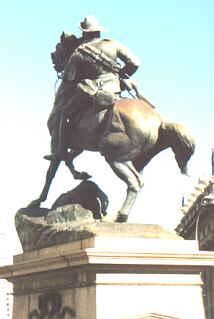
    Boer War Memorial Adelaide

    General Kitchener, during a visit to Australia in 1910 was asked to unveil a memorial to the Boar War Dead at Bathurst. He refused unless the name of Lieutenant Peter Handcock was removed from the roll. It was removed but replaced in 1964. The graves of Morant and Handcock later became very popular with Australian visitors, particularly after the 1980 release of Bruce Beresford's movie Breaker Morant.
    Although history suggests that the primary evidence against the officers came from their own men, disgusted at some of the actions they had been ordered to perform, the executions caused much disquiet in Australia.
    The court martial was conducted hurriedly and in secret, contrary to regulations, and the transcripts conveniently went missing soon afterwards. A summary of the trial appeared in the London Times on 18 April 1902. Many Australians also wondered why the two British Officers, who were among the seven originally implicated, both escaped with mere dishonourable discharges, while the Australian Officers were gaoled or executed.
    The Zimbabwe Archives in Harare holds letters, from Daisy Bates to Australian born Frederick Ramon de Bertodano Lopez, later 8th Marquis del Moral, written in 1945 on the subject of Aborigines. The ironic part is that de Bertodano was the intelligence officer in Pretoria who played a major part in convicting Morant. Another interesting fact is that Daisy Bates mother's maiden name was Hunt which of course was the name of Morant's great friend.
    I’m pretty sure the dinosaurs died out when they stopped gathering food and started having meetings to discuss gathering food

    A bookshop is one of the only pieces of evidence we have that people are still thinking
  6. #146
    Join Date
    May 2010
    Location
    brighton, brisbane
    Posts
    33,853
    Total Downloaded
    0
    Much has been written about the Breaker, but he was quite a good bush poet. Some of his poems were published the Bulletin, under the name, "the Breaker', and he counted Henry Lawson, Banjo Paterson & William Ogilvie as friends. Bob


    This , I believe, is one of his best, Bob


    WHO'S RIDING OLD HARLEQUIN NOW? by Harry ("Breaker") Morant

    They are mustering cattle on Brigalow Vale Where the stock-horses whinny and stamp, And where long Andy Ferguson, you may go bail, Is yet boss on a cutting-out camp. Half the duffers I met would not know a fat steer From a blessed old Alderney cow. Whilst they're mustering there I am wondering here - Who is riding brown Harlequin now?

    Are the pikers as wild and the scrubs just as dense In the brigalow country as when There was never a homestead and never a fence Between Brigalow Vale and The Glen? Do they yard the big micks 'neath the light of the moon? Do the yard-wings re-echo the row Of stockwhips and hoof-beats? And what sort of xxxx Is there riding old Harlequin now?

    There was buckjumping blood in the brown gelding's veins, But, lean-headed, with iron-like pins, Of Pyrrhus and Panic he'd plentiful strains, All their virtues, and some of their sins. 'Twas the pity, some said, that so shapely a colt Fate should with such temper endow; He would kick and would strike, he would buck and would bolt - Ah! who's riding brown Harlequin now?

    A demon to handle! a devil to ride! Small wonder the surcingle burst; You'd have thought that he'd buck himself out of his hide On the morning we saddled him first. I can mind how he cow-kicked the spur on my boot, And though that's long ago, still I vow If they're wheeling a piker no new-chum galoot Is a-riding old Harlequin now!

    I remember the boss - how he chuckled and laughed When they yarded the brown colt for me: "He'll be steady enough when we finish the graft And have cleaned up the scrubs of Glen Leigh!' I am wondering today if the brown horse yet live, For the fellow who broke him, I trow, A long lease of soul-ease would willingly give To be riding brown Harlequin now!

    'Do you think you can hold him?' old Ferguson said - He was mounted on Homet, the grey; I think Harlequin heard him - he shook his lean head, And he needed no holding that day. Not a ***** from a spur, nor a sting from a whip As he raced among deadwood and bough While I sat fairly quiet and just let him rip - But who's riding old Harlequin now?

    I could hear 'em a-crashing the gidgee in front As the Bryan colt streaked to the lead Whilst the boss and the xxxx were out of the hunt. For their horses lacked Harlequin's speed; The pikers were yarded and skies growing dim When old Fergie was fain to allow: 'The colt's track through the scrub was a knocker' to him - But who's riding brown Harlequin now?

    From starlight to starlight - all day in between The foam-flakes might fly from his bit, But whatever the pace of the day's work had been, The brown gelding was eager and fit. On the packhorse's back they are fixing a load Where the path climbs the hill's gloomy brow; They are mustering bullocks to send on the road, But - who's riding old Harlequin now? First published in The Bulletin, 11 December 1897.
    I’m pretty sure the dinosaurs died out when they stopped gathering food and started having meetings to discuss gathering food

    A bookshop is one of the only pieces of evidence we have that people are still thinking

  7. #147
    Join Date
    Jun 2009
    Location
    North Central Victoria
    Posts
    2,356
    Total Downloaded
    0
    Quote Originally Posted by zulu Delta 534 View Post
    One of the unfortunate side effects of today's way of life is that we tend to take a movie maker's romantic attempt to make a movie more socially palatable for an audience, as being historically correct, rather than follow actual factual evidence, and in so doing sway future generation's so called opinions of heroes and/or anti-heroes.
    Many of our modern day sporting "celebrities" are prime examples of this, along with the 'Breaker', 'Ned Kelly' and more recently 'Chopper Reid'.

    Digger, if I were you I would think about an occupation change, as everyone seems to know who Ben Hall was, or who Ned Kelly was, or even Breaker Morant, but no-one remembers the coppers who collared them, or if they do, they mention their names in an entirely different tone of reverence.
    Regards
    Glen
    Ned Kelly is an interesting one IMHO. If he was alive today he would be known as a serial killer. There is a great monument to the coppers that he killed on the roundabout in Mansfield.

    Also I do have a chuckle with the "such is life" quote as he most probably said "Ah well, it has come to this". Probably wouldn't look as good on a sticker next to your southern cross and F' off we're full sticker

  8. #148
    Join Date
    Jan 1970
    Location
    33º 29' S 150º 13'30" E
    Posts
    1,148
    Total Downloaded
    0
    Quote Originally Posted by bob10 View Post
    Game to the last, Morant and Handcock refused to be blindfolded and went before the firing squad at the old Pretoria gaol, Pietersburg in the early morning of 27 February 1902. Handcock's wife, who lived in Bathurst with her three children, only found out from the newspapers that her husband had been shot. Kitchener later admitted, in writing, that he had issued orders to kill Boers wearing English uniforms!

    ......During a visit to Australia in 1910 was asked to unveil a memorial to the Boer War Dead at Bathurst. He refused unless the name of Lieutenant Peter Handcock was removed from the roll. It was removed but replaced in 1964.
    Breaker Morant seems to have built up a legend, but little is recalled about Lt Handcock. Handcock's name was not originally included on the Bathurst Boer War Memorial, as he had not died on service. In fact, as a convicted criminal, he was not eligible for any pension. His wife was left destitute and unable to provide a home for herself and 3 chidren. She relied on charity, which the Bathurst community was willing to provide as Peter Handcock was recalled to be a upstanding member of the community and a well repected Farrier and bush vet. On Kitchener's visit to Bathurst to unveil the memorial, he was harangued and pelted with tomatoes by Mrs Handcock, while the crowd and police looked on with approval. British aides with Kitchener were left to calm and guide Mrs Handcock from the scene, but were booed by the crowd. Kithchener fled! It was the Bathurst community that lobbied long and hard to have Handcock's name placed on the memorial, and it required an amendment to Commonwealth legislation to do so, as (as mentioned) he had not died on active service. (Technically, Morant and Handcock were dishonourably discharged before being executed!).


    BTW Kitchener was visiting the Central West to see the construction of the Lithgow Small Arms Factory. Loved Lithgow, hated Bathurst.

  9. #149
    Join Date
    Jan 1970
    Location
    33º 29' S 150º 13'30" E
    Posts
    1,148
    Total Downloaded
    0
    Of course, Morant and Handcock's deaths also prompted another change to Australian Commonwealth law. Australia removed Britain's right to impose martial law on Australian servicemen, and created our own scale of penalties which did not include execution.


    NZ was slow to follow, and 5 NZ soldiers were executed in WW1 for disciplinary offences. They were granted full pardons by NZ in 2000.


    The law change may have influenced the British view of Aussies as a rowdy undisciplined mob in WW1, but of course it may have also encouraged the Aussies to show poor discipline and disrespect to the British. "Ya can't shoot me, ya stuck up Toff!" Either way, Morant and Handcock contributed significantly to the independent character of the Aussie soldier.

  10. #150
    Join Date
    Dec 2007
    Location
    Back down the hill.
    Posts
    30,126
    Total Downloaded
    0
    Quote Originally Posted by digger View Post


    MMM sort of a compliment! Thanks!

    It's been a while Digger, we must be due for a rhyme.
    If you don't like trucks, stop buying stuff.
    http://www.aulro.com/afvb/signaturepics/sigpic20865_1.gif

Page 15 of 18 FirstFirst ... 51314151617 ... LastLast

Bookmarks

Bookmarks

Posting Permissions

  • You may not post new threads
  • You may not post replies
  • You may not post attachments
  • You may not edit your posts
  •  
Search AULRO.com ONLY!
Search All the Web!