

 Reply With Quote
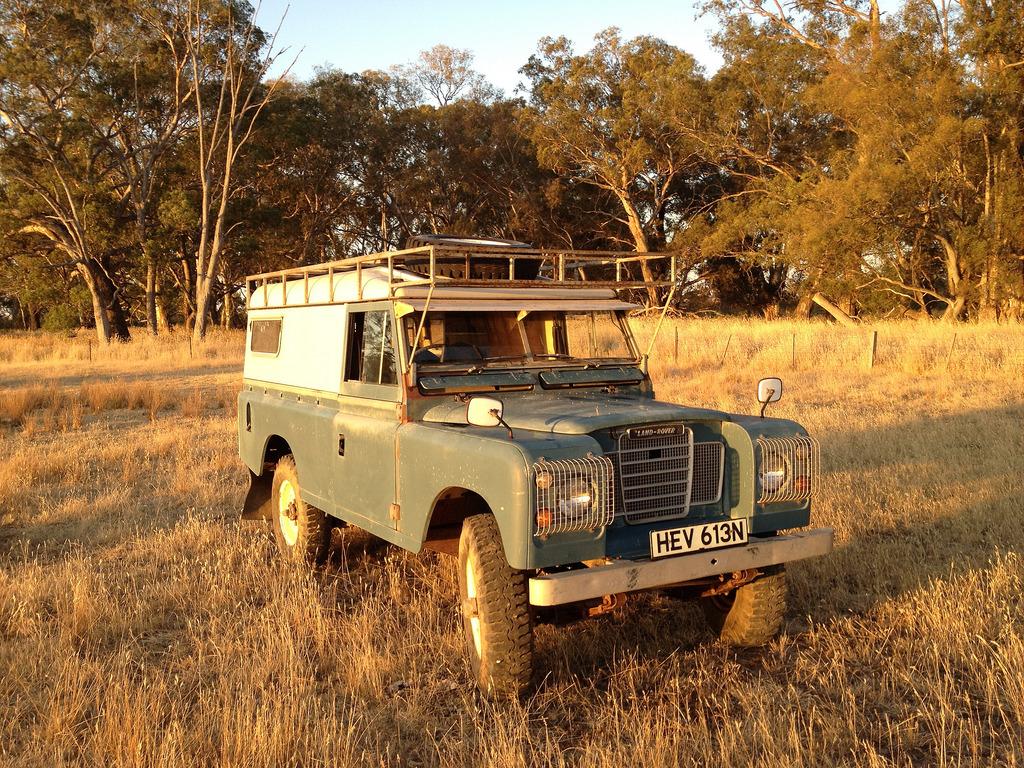
Welcome phin that looks like a nice straight land rover, complete with it's uk plates and it looks like it's finished in "Marine Blue" too
Look forward to seeing more pics especially the interior

 Master
Hi all,
This is my first post here, I've had a couple of Land Rovers for a few years but have just purchased a new project. It's quite an unusual vehicle - it's a 1974 RHD diesel, purchased in the Netherlands and first registered in the UK in late 1974 or early 1975. The story is that it was bought by a Dutch couple, who had it converted to a camper by a workshop in the Netherlands, then used it to tour around the UK and Europe. They brought it out to Australia and drove it all around the country and left it here when they left. It's since been registered in the early 90s in Victoria but has spent the last 15 years in a shed.
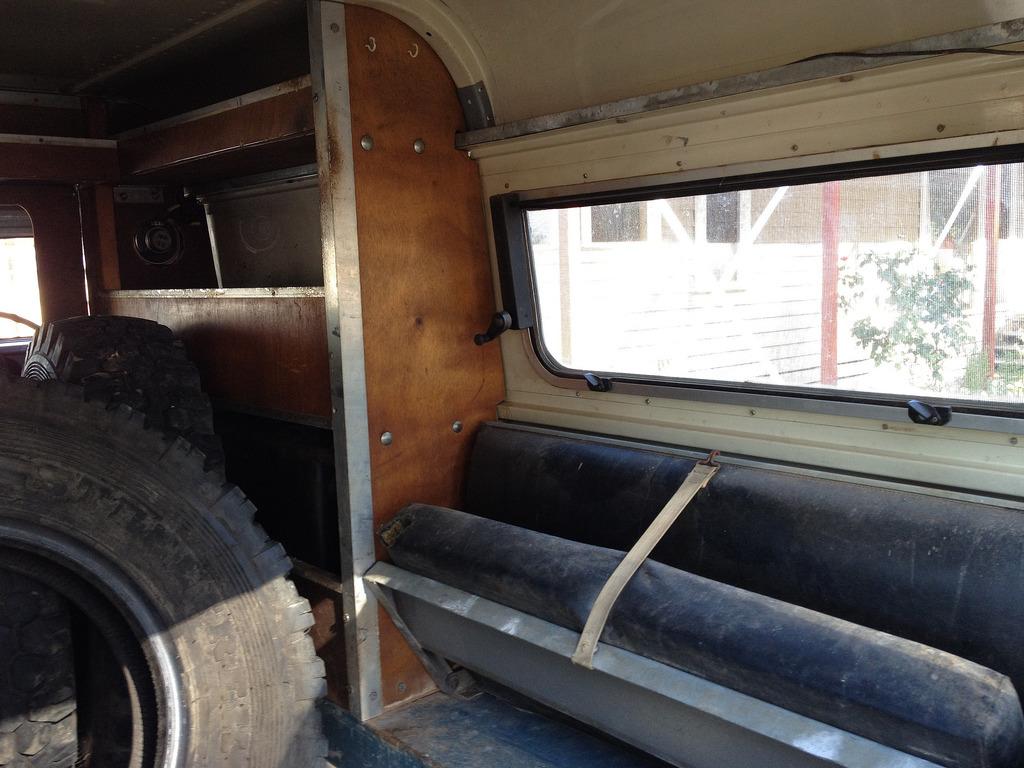
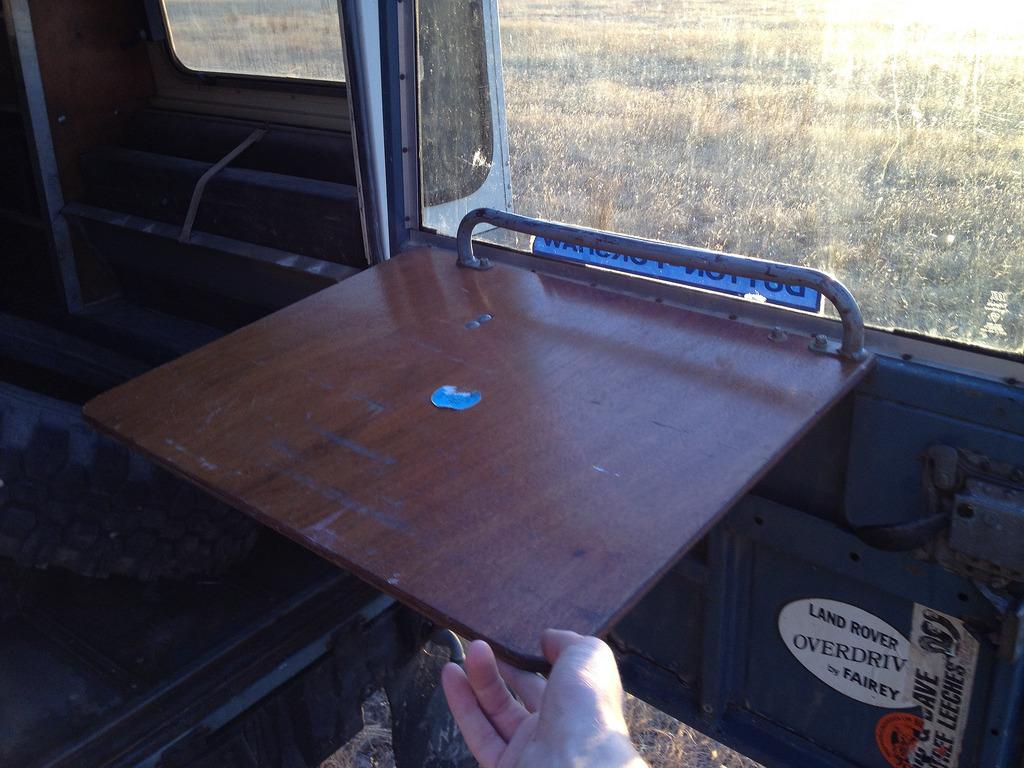
The conversion itself added a roof rack, timber shelving, caravan type side windows, a fresh water tank, lens guards, Fairey overdrive (now missing) and Fairey free wheeling hubs. Although the interior is a bit tatty, everything else seems pretty solid.
I'm planning on getting it onto club reg, so will need to do the brakes, front loom where rats got in and no doubt a few other things. I thought I'd start a thread as I'll probably have quite a few questions!
cheers
Phin
photo(1) by landroverseries, on Flickr
photo by landroverseries, on Flickr
 ChatterBox
Welcome phin that looks like a nice straight land rover, complete with it's uk plates and it looks like it's finished in "Marine Blue" too
Look forward to seeing more pics especially the interior
 Super Moderator & CA manager
Subscriber
Super Moderator & CA manager
SubscriberNice project. Welcome to the forum.
If you need to contact me please email homestarrunnerau@gmail.com - thanks - Gav.
 Swaggie
Subscriber
Swaggie
SubscriberExcellent little project you've got there!
I like the sun visor
Cheers
David
Master
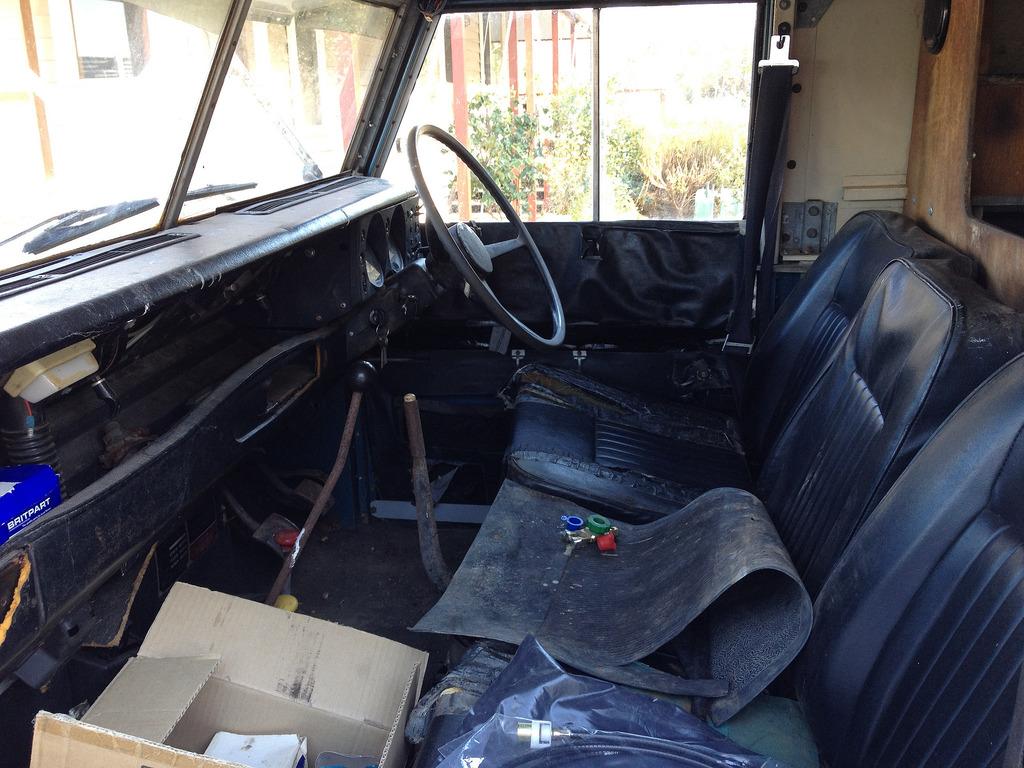
A couple of photos of the fairly tired interior:
photo-1 by landroverseries, on Flickr
photo(1) by landroverseries, on Flickr
photo(2) by landroverseries, on Flickr
It should clean up ok with a bit of work - plan is to get a replacement lower dash, a couple of seat cushions and some door cards. The plywood will also need to be refinished.
cheers
Phin
Master
The first thing I need to sort out is the braking system. All the hydraulics, shoes and drums are going to be replaced. I replaced the brakes on my IIA 109 about a year ago and the performance is still unspectacular. Is there a lot of benefit to fitting a booster and/or six cylinder front brakes?
I have a six cylinder boosted pedal assembly, but the vacuum source seems to be the issue. From reading a few threads here, I have four options:
1. find an original butterfly valve
2. fit an electric pump
3. fit a tdi alternator and plumb in oil lines
4. make up a new bracket and fit a belt driven vacuum pump
I understand options 1 and 2 are not really practical/desirable, and I'm not sure what the better way to go is between options 3 and 4. Any ideas on what might be more practical?
As I'll be replacing the drums anyway, it's tempting to upgrade to six cylinder brakes. Are these worth fitting even if I don't go ahead with a booster?
many thanks
Phin
Master
electric vacuum pumps are fitted to quite a few modern cars (volvo use them from memory) so that would make it simple, just hunt ebay with "volvo vacuum pump" or similar wording, butterfly valves take a bit of setting up to get them working correctly and it's worth getting a vacuum reservoir if you do go that route (i'm guessing you do have a diesel being as you've considered this idea)
the 6 pot drums are a bit wider than standard 109 drums but i believe they require matching backplates as well, here in the UK the drums are expensive compared to the usual 109 drums ....
i'd suggest that if going for an upgrade you look at one or two of the disc brake conversions if funds stretch that far, a friend has just done his stage 1 for £700-750 UK and reckons it's one of if not the best thing he's ever done to a Series, no more adjusting brakes on the front, no more wondering which way it's going to pull, just hit the brakes and stophe fitted his due to it being family transport and was fed up of the worry about stopping it with his precious cargo aboard
i don't understand the, "fit a tdi alternator and plumb in oil lines" (it's the oil lines bit more than anything as i've not seen a 200tdi alternator that does anything other than generate electricity), a 200tdi alternator puts out about 65amps over here so in my mind is a worthwhile upgrade, just needs the ends clocking to mount it up to the Series alternator mount and the ends changing on the wires as it has bolt up connectors rather than a plug, there will be other high output alternators that fit with minimal work, i just don't know what scrap cars to take them off
hope that helps
Pete
 YarnMaster
Supporter
YarnMaster
Supporteri don't understand the, "fit a tdi alternator and plumb in oil lines"
From this quote I think he means an alternator from a diesel not actually a TDI. I bought one from a wrecker and put it on my 2 1/4 diesel in my fire truck. I think mine was from a Dyna . They have the vacuum pump on the back with an oil line. Works well. My Isuzu powered 120 also has a bigger one for brake boosting. There is a photo of mine here.
http://www.aulro.com/afvb/general-ch...ire-truck.html
Back a few posts the engine shot shows the booster.
Didiman
Master
Thanks for the replies. I was wrong about the TDI alternator, should be a 4BD1 alternator, which had a vacuum pump at the back. I’m not sure but maybe the TDI vacuum pump was cam driven? I did a bit more research into vacuum pumps and the most common and easiest solution in the UK is to fit a Peugeot 504-505-205 belt driven vacuum pump with a bracket mounted to the front lifting point and another through a water pump bolt. Trying to track down a good second hand one locally, otherwise might have to get one from the UK or France.
I put in a couple of orders last week with Paddocks and Craddocks – decided to go with the 6 cylinder front drums in the end. I did consider the discs, but was looking at around $1500 plus postage to Australia, and potential costs of getting engineering approval. The 6 cylinder drums ended up at around $300 more than if I’d just upgraded the 4 cylinder front drums, and this includes new backing plates. From what I’ve read, the 6 cylinder drums should be more or less as good as the discs (except in water and under prolonged heavy braking) if they are correctly adjusted.
The next question is whether to keep the single circuit brakes or go to dual circuit. I’ve ordered a single circuit servo master cylinder from the UK (they are only around $25 or so), but the pedal tower I obtained has a dual circuit master cylinder which I could have rebuilt. I’m leaning towards keeping the single circuit, at least of the time being, as the risk of catastrophic failure should be tiny with all new components. My experience with brakes so far has been that failure is usually progressive and a result of a worn master cylinder or leaking calipers and wheel cylinders – none of which would be fixed by dual circuit brakes. Otherwise, am I correct in assuming there are no other benefits of the dual circuit brakes?
Cheers,
Phin
Master
i believe the idea behind dual circuit brakes is so that if you have a front or rear slave fail you still have full braking on the opposite end
i fitted dual circuit to my 88" with booster from a S3, i didn't bother with PDWA (Pressure Differential Warning Actuator/shuttle valve thing) it gave me really light brakes in comparison to my original unboosted single line system
i also upgraded to 11" drums on the front but i used rear backplates off an old 90" so it gave me single leading shoes, really powerful braking now and simple to bleed rather than struggle with the twin leaders and twin slave airtrap ones (they were also cheap secondhand)
just mods i'd read about and thought i'd try out on my rough and ready 88" bitsa, rather pleased with them
 Posting Permissions
| Search AULRO.com ONLY! |
Search All the Web! |
|---|
|
|
|

Bookmarks