Oil vapour recirculation (Blow-by)
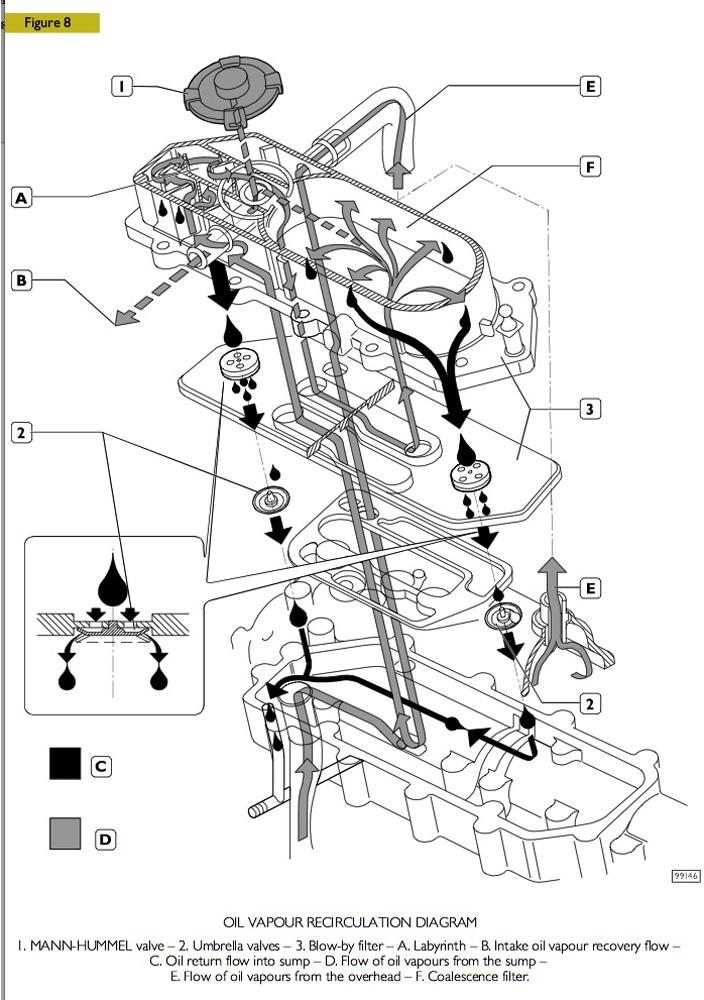
Part of the gas produced by the combustion during the engine operation blows by the piston snap ring ports, in the oil sump, and mixes with the oil vapours present in the oil sump. This mixture, conveyed from the chain compartment to the top, is partially separated from the oil by means of a device situated on the top side of the distribution cover and is introduced in the air suction system. This device consists mainly of a rotating filter (3), fit flush on the stem (1), a high pressure/shaft control and a cover (2) where the valves (4 and 5), usually closed, are fitted. The diaphragm valve (4) regulates the partially purified mixture and keeps the pressure inside the chain compartment around a value of ~ 10 ? 15 mbar.
The umbrella valve (5) discharges some of the oil still present in the mixture coming from the filter (3) in the chain compartment and the oil condenses in the chamber (6).
Operation
The mixture which passes through the rotating filter (3) is partially purified from the oil particles, as a result of centrifugation, and so these particles condense on the cover walls to return to the lubrication circuit. The resulting purified mixture is let in through the stem holes (1) and the diaphragm valve consensus (4) inside the air vent upstream of the turbocharger. The opening/closing of the valve (4) depends mainly in the ratio between the pressure operating the diaphragm (4) and the depression below it. The oil still present in the mixture coming from the rotating filter (3) and which condenses in the chamber (6) is drained into the chain compartment through the umbrella valve (5), when the pressure that keeps it closed drops as a result of the engine stop.


 Reply With Quote

 ForumSage


 Posting Permissions

Bookmarks