

 Reply With Quote
Can you post pics of his burner and forge set up.Originally Posted by LandyAndy


 RoverLord
Lindsay has made several knives for his mates as 18th birthday presents,they looked a million bucks.
He has tried making a sword but hasnt got the heat to do the whole blade yet.
Andrew
DISCOVERY IS TO BE DISOWNED
Midlife Crisis.Im going to get stuck into mine early and ENJOY it.
Snow White MY14 TDV6 D4
Alotta Fagina MY14 CAT 12M Motor Grader
2003 Stacer 525 Sea Master Sport
I made the 1 millionth AULRO post
Wizard
Can you post pics of his burner and forge set up.
 AT REST
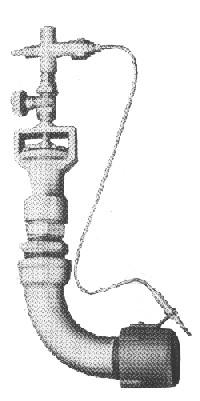
My sister in law fires her pottery kiln with LPG so I looked up kiln burners on goggle:
Ceramic Burners
 Master
It's pretty easy to make your own burner. I forget where I got my information from, but it was on the net somewhere. I used a MIG wire nozzle as a metering jet, and dispensed with the inconvenience of a regulator altogether (probably dangerous). The oven is a horizontal section of oxy bottle lined with fire brick and 'refractory', a sort of soft fireproof plaster of paris. The burner fires down through a hole at the 2 o'clock position. This oven is handy for small jobs when it would be inconvenient to fire up the coke-fuelled hearth, as the heat-up time is much shorter. (I try to use the term 'forge' to describe the whole work area, like the term 'workshop' - this terminology comes from an old blacksmith).
Oh, by the way, if you build one of these watch out for the wafts of flame that come out the front.
Master
You may find this site useful ....
Forge and Burner Design Page #1
or
BP0192 Gas Forge - 100 Series - Articles - Articles - I Forge Iron
Swaggie
The "whole work area" of a blacksmith is the smithy. The forge is the bed of coke with a bellows or blower wherein the metal is heated. A friend did his apprenticeship as a blacksmith at Evans Deakin South Brisbane the same time I was apprenticed as a Fitter-machinist. He tells me he grew to hate jackhammer and chipping hammer points as the apprentices had the job of re-pointing them by the 44 gallon drum full. I met him as young tradesmen doing casual work on the ED's ship repair gang. He left the trade due to lack of work and much later undertook extra studies to become a farrier. He made enough from this to buy a motel. He points out that a farrier is not a blacksmith unless apprenticed as one but many blacksmiths acted as farriers particularly in country towns. A proper farrier studies horses legs and feet to be able to create shoes that will correct deficiencies.
URSUSMAJOR
 Posting Permissions
| Search AULRO.com ONLY! |
Search All the Web! |
|---|
|
|
|
Bookmarks