Page 17 of 18 FirstFirst ... 715161718 LastLast
Results 161 to 170 of 180

Thread: OK short quiz.

  1. #161
    Join Date
    Aug 2007
    Location
    Loganlea Qld
    Posts
    1,652
    Total Downloaded
    0
    An interesting if not a bit morbid tale of Burenda in its early days:


    The Burenda Tragedy.

    We are indebted to a perfectly reliable cor- respondent in the Warrego district for the following narrative of this disgraceful and horri-

    ble affair:-

    At Burenda township, ten miles from the station, a race programme, cutting out about £40 to be run for, had been arranged for the 28th December; and a motley crew of shearers, washers, shepherds, &c., from the stations round had gathered in anticipation of a "big drunk." The races - conducted on re- publican principles - did not begin till late in the afternoon, there being no one of any re- spectability, or sufficient sobriety, interested to take the lead; and up to three o'clock in the afternoon "all hands and the cook" were deeply engaged in the more congenial pleasures of what they would call "lushing," "scrapping," and "gaffing," - i.e., drinking, fighting, and gam- bling. The roudy element had it all their own way; any quasi-respectable man making a protest was at once "slouched," there being no police or check of any sort, the only available constable, stationed at the Yo Yo native police barracks, fifteen miles away, having gone to Charleville the day before with Stacey - a storekeeper and ex-publican residing at Burenda - in custody, he (Stacey) being in what is commonly called the "horrors" from drink. A large table was placed on the verandah of Cavanagh's public-house, which was crowded with drunken, blaspheming men, and the "bones" (dice) rattled away to the accom- panying chinck of the coins and the click of bottles and glasses for hours. A move was made to the race-course by those who were able to move about 3 o'clock in the afternoon, and the following events ran off amid scenes of drunken- ness and bestiality sickening in their details - a living disgrace to any civilised com- munity of white men:- Maiden Plate, £10; Shamrock 1st. Handicap, £16; Sir Richard 1st. Publicans' Purse, £10; Cockles 1st. Hurry Skurry, £5; Mayfloweer. A disgraceful, cowardly act was committed by a man (?) while riding in one of the races. Finding he was likely to be beaten home by a horse that was pressing him hard up the straight, being well ridden by a lad named Harris, he (this man) (?) drew out his whip, and laid Harris' face open from brow to chin several times. This man is proverbial for "being all there to pick his marks."

    Albert Green, James Wilson, James, Larkins, Louis Schmidt, and William Nolan are the names of five misguided men who met together at Burenda township to celebrate, in the usual style, the birth of the Saviour. They were all "good drinking men," especially Green and Wilson - at least so they were described at the inquests held on the bodies of the two last- named shortly after. They were described as all being "continually muddled up in drink," and "the worse of liquor." These five men used to have a "go in" at the public-house, and then would take bottles of grog to a Chinaman's humpy close by (the same wherein Charley Ah Soo chopped up his two countrymen with a tomahawk last July twelve months). This is a sample of a Christmas spree at a bush "pub.;" and a very fair sample too. James Larkins on oath (at the inquest alluded to) stated that "He took two nobblers of Cavanagh's grog early on the morning of the race day (28th ultimo), and remembered nothing more till the evening of the 31st, when he found himself in bed with his clothes on, in a back room at Cavanagh's public-house, and all his money gone, and that he had not been right in his head ever since; he may have taken more grog after the two nobblers, but he had no recollection of so doing; might have been at the races, didn't know it." On the morning of New Year's Day, about eight o'clock, the five men already named started from the township on foot, carrying their swags, and taking with them a small canvas bag and two billlies of water and a bottle of grog. They had with them five dogs, intending to make Nive Downs station by an old track, known as the Postman's Track. Wilson affirmed that he knew the track well. They are described as all having been drunk the night before, having, as it were, a final carouse, and at starting they were all "muddled up in drink." Larkins, the man who has not been right in his head since the 28th, swore that he was the most sober man of the lot when they left the township. After travelling about four miles heat and thirst overcame them, and they camped for a while, drank all the water and half the bottle of brandy or rum. No one could say what liquor it was. Moved on 3 or 4 miles further and again camped and finished the grog. Green and Larkins then "pushed on," leaving the other three camped. After Green and Larkins had walked 6 or 7 miles further, Green stopped and complained of being "very bad," and said:- "Jemmy, I am very sorry I drank that grog, I saw tobacco in it when I poured it out in the pannikin." After travelling a little further, Larkins felt his head "very bad," and had to stop and tie it up with Green's handkerchief. He was quite unable to proceed any further, and lay down. Green "looked queer," and went off "walking very fast," leaving his mate behind, and Larkins never saw him again. At sundown Larkins made up his mind to kill one of his dogs, and tried to coax the dog to him; but, although the dog had followed close at his hells all day, never leaving him, he would not come near his master, who now took out his knife to be ready. The dog ran away about one hundred yards, and commenced howling, and soon went away altogether, and has not been seen since. Larkins then cut the other dog's - a puppy - throat, and drank the blood. He then abandoned his clothes, and pushed ahead along the track, and next morning reached water, arriving at Nive Downs at ten or eleven o'clock on Sunday morning. He appears not to have said anything about the state in which he left his mates till Tuesday, when one of the search party from Burenda Station ran his tracks to Nive Downs. He gave as his reason for not doing so that he "didn't know rightly how things stood," as he was "muddled up in drink!"

    It appears that Green, after leaving Larkins, wandered off the track into the scrub in quest of water, and about ten o'clock at night heard a dog bark; and, guided by the sound, came to a place where Louis Schmidt was camped, and who was also searching for water. After about two hours, Nolan, also attracted by the barking of Schmidt's dog, joined them, stating that he had left Wilson, who was unable to travel from where they finished the grog on the track. The three men camped together till dawn. They all suffered intensely from thirst. Schmidt had some sugar and tartaric acid in his swag, and this they ate (Green mixing his with wine in a pint pot, which caused him to retch violently?) At break of day the three men started again to search for - life. After two hours travelling Green and Nolan lay down, completely "knocked up;" Schmidt left them some sugar and a little tartaric acid, and went on by himself, and searched all that day (Sun- day, the 2nd) without finding any water. During the day his dog died. The sufferings of Schmidt on Sunday night were dreadful. He was able, however, next morning to crawl along, and seeing some cockatoos flying about, he made for the spot, and at 11 or 12 o'clock found water in the Warrego. On the following morning (Tuesday, the 4th) he made a sheep station belonging to Burenda run, six miles from the washpool, and there learned from the shepherd that Nolan had come there the night before, quite naked, and fearfully exhausted, stating he had left Green nearly dead in the scrub. Nolan had gone into the head station that morning. The shep- herd having reported the matter the night before, parties were then out searching. The sufferings of Nolan and Green, before they parted company, and of Nolan afterwards till he reached water, were, as described by Nolan at the inquests, dreadful. They used to dig holes at the roots of the most shady trees, and get up the cool sand and ground to cover their naked bodies with. At mid-day, on Tuesday, the 4th instant, the search parties from Burenda station found Wilson on the track where he had been left on the 1st instant, alive. He was lying upon his back in the scorching heat of the sun, covered with ants. He spoke quite clearly when first found, saying, "I'll give a pound for a bucket of water," and then immediately, "Why don't you lift me up?" As the water-bag was held to his lips he murmured, "It's too late," his head rolled to one side, and he was dead. He had lain there, and lived! in a heat, by day, averaging about 130 degrees, without food or water, for exactly four days! The dead body of his dog was found close by. Later on the same day (the 4th) the same search party discovered Green's dead body, quite naked, lying on its face, at the spot where Nolan had left him. He had apparently died soon after he was left, the body being quite black. On the night of the 4th, a messenger from Burenda station was despatched to the Yo Yo police bar- racks, distant from the station twenty-five miles. Sub-inspector Moran sent on to Charleville (forty miles further) the next day, the black trooper not reaching the latter place till eight or nine o'clock at night (the 5th). At nine o'clock the following night (the 6th) the Police Magistrate and Inspector Thornton were at Burenda station (seventy miles), and on the 7th and 8th the police magistrate held enquiries, when the above particulars were elicited.

    After perusing the foregoing, our readers will not have much difficulty in estimating the value of Cavanagh's (the only publican in the town- ship) story, which he sends us, as follows:-

    Sir, - I trust that you will do me the favor to insert the following in your next issue; - With reference to an article which appeared in your issue of the 15th ultimo, relative to the death of two men out of a party of five who were edea- voring to make their way to the Nive Downs station, grounded on the information supplied by a Charleville correspondent, in which I am charged with moral - if not legal - murder, in causing the death of the two men who perished in the bush by means of poisoned grog, I beg to state that the men referred to did not frequent or stay at my hotel. During their residence here they took up their abode at a Chinaman's lodging-house, but they sent here occasionally, not frequently, for a bottle of grog, which was invariably genuine capsuled, and either Hennessey's or Martell's. When the men started for the Nive Downs station they were perfectly sober. They took with them heavy swags, and one bottle of grog. The track to the Nive Downs, which passes through several miles of thick scrub, is not easily found from this side, several horsemen having on previous occasions failed to find it. The five unfortunate foot- travellers never got on the track, hence the disaster and tragic death of the two men. The weather was unusually hot, and the men but scantily supplied with water; they succumbed to the heat and thirst, as many a man remote from grog has done ere now. I have never been charged with selling poisonous liquors, nor has any man's death been previously laid at my door. I have felt much surprised that you should produce an article charging me with such serious causes without at least waiting for authentic particulars. MICHAEL CAVANAGH.

    Ellangowan Hotel, January 26.


    Regards
    Glen

    1962 P5 3 Ltr Coupe (Gwennie)
    1963 2a gunbuggy 112-722 (Onslow) ex 6 RAR
    1964 2a 88" SWB 113 251 (Daisy) ex JTC

    REMLR 226

  2. #162
    Join Date
    May 2010
    Location
    brighton, brisbane
    Posts
    33,853
    Total Downloaded
    0
    OK, what is the modern name for Kimberly, a coastal town which was to be the terminal for the overseas cable from Java, which terminated at Darwin instead? Kimberly was the supply point for vessels trading in the Gulf. The name was changed in the 1900's. Bob
    I’m pretty sure the dinosaurs died out when they stopped gathering food and started having meetings to discuss gathering food

    A bookshop is one of the only pieces of evidence we have that people are still thinking

  3. #163
    Join Date
    May 2010
    Location
    brighton, brisbane
    Posts
    33,853
    Total Downloaded
    0
    Quote Originally Posted by bob10 View Post
    OK, what is the modern name for Kimberly, a coastal town which was to be the terminal for the overseas cable from Java, which terminated at Darwin instead? Kimberly was the supply point for vessels trading in the Gulf. The name was changed in the 1900's. Bob

    Hint- near where Murrandoo Yanner hangs out, Bob
    I’m pretty sure the dinosaurs died out when they stopped gathering food and started having meetings to discuss gathering food

    A bookshop is one of the only pieces of evidence we have that people are still thinking

  4. #164
    Join Date
    Aug 2007
    Location
    Loganlea Qld
    Posts
    1,652
    Total Downloaded
    0
    I was under the impression that the original Qld bid for the OTL was to terminate at Burketown which although not originally discovered by him, was set up by Robert Towns who also set up Townsville as ports to assist his pastoral developments. I hadn't heard of Kimberly before, will be interested to hear.
    Regards
    Glen

    1962 P5 3 Ltr Coupe (Gwennie)
    1963 2a gunbuggy 112-722 (Onslow) ex 6 RAR
    1964 2a 88" SWB 113 251 (Daisy) ex JTC

    REMLR 226

  5. #165
    Join Date
    May 2010
    Location
    brighton, brisbane
    Posts
    33,853
    Total Downloaded
    0
    Karumba
    Town in Australia

    Karumba is a town in the Gulf Country region of Queensland, Australia, 71 kilometres by road from Normanton and 2,159 kilometres from the state capital, Brisbane. The settlement was previously known as Norman Mouth and Kimberely.


    Port of Karumba

    The Port of Karumba is located at the mouth of the Norman River in the south-east corner of the Gulf of Carpentaria. The Century Mine started exporting zinc concentrate trhough the port in December 1999. Zinc slurry is piped 304 kilometres to the port from the mine, dewatered and loaded onto a 5,000 tonne, fully enclosed transfer vessel for the 40 kilometre journey to the export ships that anchor in deep water in the Guld of Carpentaria, about 24 nautical miles off the coast.
    Other facilities in the port provide for general cargo, fuel, fisheries products and the export of live cattle. Karumba also acts as a transhipment port for Mornington Island, other Gulf communities and the Port of Weipa for the majority of the year, with refrigerated semi-trailers bringing goods north to Karumba for transhipment.


    Karumba, next small town from Burketown, at the mouth of the Norman River. Home base for Raptis [ I think] with a big processing plant. Part of the year the prawning fleet operates out of here. A family friend " twiggy", was the radio operator there for some years. A mate of mine, Karl Linden, was one of the first to get a license to prawn there. Twiggy has fond memories of this place, which really hummed when the fleet was in, we had a quiet beer there.


    Apart from that, Karumba attracts amateur fishermen from all over. Fishing, Crabbing, at the right time of year. There is also a cloud phenomenon, which rolls in over the town attracting photographers . Called the morning glory, I will post a separate description of it. A local, a mate of twiggy's, has a 16 ft boat, which he takes to Sweers Island fishing. He goes there because he reckons Karumbas fished out! [ as if, he's just spoiled] Next time we are up there, I've booked my passage. It would be just over 100 kms from Karumba, looking forward to that one Bob
    I’m pretty sure the dinosaurs died out when they stopped gathering food and started having meetings to discuss gathering food

    A bookshop is one of the only pieces of evidence we have that people are still thinking

  6. #166
    Join Date
    May 2010
    Location
    brighton, brisbane
    Posts
    33,853
    Total Downloaded
    0
    AH, Qld, beautiful one day, glorious the next! Bob [Just one thing. If you are at Karumba late in the season, & the first thunderstorms roll in, get out, otherwise you may be there for months. ] The road just before it disappeared


    film footage, meteorological and tourist information by Rob Thompson


    Telephone Rob in Australia +61 (0)429 493828 or email rob at aerialvideo dot com dot au
    NEWSFLASH!
    It looks like Sydney Motor Glider Flight Group may have a H36 Dimona motor glider based in the Gulf next September and October and it will be available with an experienced instructor. If you are interested in learning how to "surf the Glory" let them know. SMGFG conduct motor glider flights and gliding lessons at Camden near Sydney

    The Morning Glory Cloud video footage here is from Aerial Video Australia who has high definition video footage available.
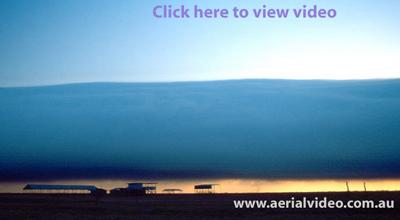
    Dawn over the Gulf during the latter part of the dry season and if you're lucky the atmosphere will put on for you one of it's rarest and most spectacular displays....the Morning Glory Cloud, one of the world's most extraordinary meteorological phenomenon. Up to two kilometres high stretching from horizon to horizon this is a shockwave in the atmosphere of immense proportions which now attracts glider and hang glider pilots who ride it just as a surfboard rider does on the ocean.


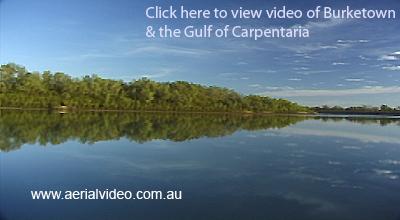
    The best location to see the Morning Glory is Burketown in far North Queensland's Gulf of Carpentaria. The Glory generally goes through Karumba before dawn and arrives shortly after first light in the Burketown area. Towns are few and far between in this part of Australia - if you are travelling be prepared for some quite remote countryside with October temperatures over 40 degrees celsius at times. Many of the roads are dirt and the first thunderstorms of the wet season can start in mid to late October


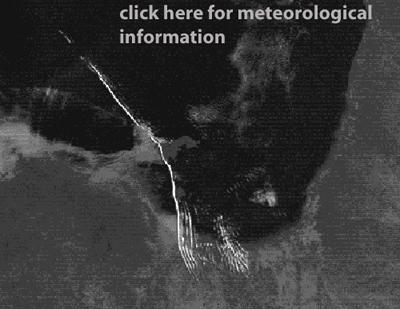
    This satellite image shows the Morning Glory appearing between Karumba and Burketown with a number of waves forming. Here is Morning Glory Cloud meteorological information including synoptic charts, computer modeling, photos and video footage which demonstrate the weather patterns that accompany the Morning Glory Clouds.


    Here is tourist information on Burketown.


    Other places in the Burketown region worth checking out are.......
    Sweers Island: also has the roll cloud arriving shortly after dawn and is a tropical paradise not to be missed. Great fishing with boats and fishing gear included
    Sweers Island aerial video:
    Birri Resort: On Mornington Island for fishing and relaxing.
    Lawn Hill Gorge: A stunning oasis with spring fed creeks and waterfalls...fabulous swimming and camping!
    Aerial Video of Lawn Hill Gorge:
    I’m pretty sure the dinosaurs died out when they stopped gathering food and started having meetings to discuss gathering food

    A bookshop is one of the only pieces of evidence we have that people are still thinking

  7. #167
    Join Date
    May 2010
    Location
    brighton, brisbane
    Posts
    33,853
    Total Downloaded
    0
    I'm terribly sorry, forgot to clarify the OTL link. Foolish me, Bob


    History


    Karumba - Yesterday - Today - Tomorrow

    Yesterday

    In the 1870s a telegraph station was built on the site of the present town of Karumba - this was during the gold mining boom in the Gulf. The overland telegraph line ran to the Gilbert River, Mt Surprise and on to the more populated centres on the East Coast. Initially the settlement was known simply as Norman Mouth being at the entrance of the Norman River into the Gulf waters.

    The Queensland Government at one time considered the undersea cable, eventually laid to Darwin, might come ashore at Karumba. In fact the contractors building the famous overland telegraph from Darwin to Adelaide sailed to Karumba to transmit messages requesting materials and assistance during their contract.
    Some ships were able to navigate the river to Normanton - a valuable transport system providing for the growing number of pioneers and residents to the region.
    The name changed to Kimberley in 1876 for a short time, however the confusion with the Kimberley region in Western Australia brought about another change - Karumba - the name used by local indigenous people.
    A meat-works was established where Raptis & Sons are located today by a firm called Shanns and later Andersons. Land allocations and the first moves into a pastoral industry in the Gulf region provided the catalyst for what is today a multi million $ industry. Beef was prepared in Karumba and frozen to be taken south by ship.
    In 1937 the Flying Boat service operated by Qantas and BOAC established a base in Karumba to accommodate and refuel the Short Sunderland aircraft on their routes to London. The port then served as an RAAF Catalina base during WWII - the Catalinas operated from Karumba into the Dutch East Indies (Indonesia), New Guinea and Timor.
    After the war the base was taken over by a Melbourne identity - Rene Henri - who established the first fishing and hunting business which he named ‘Karumba Lodge'. The next owner was Ansett Airlines who used the Lodge as a base for their ‘Station Run', delivering mail and goods to cattle stations and flying barramundi to the booming centre of Mt Isa. Float planes still used the river until 1976.
    By the 1950s Karumba was fast becoming a popular spot for people eager for a fishing adventure in the Gulf of Carpentaria. There were also the crocodile hunters who pursued these prehistoric reptiles for their valuable skins.
    When large quantities of shrimp were discovered in the Gulf of Mexico, an Australian - Craig Mostyn reasoned that similar species should be found in the Gulf of Carpentaria. It took about two years to establish there were in fact commercial quantities to be found here as well - and from then on it was like a second gold rush.
    In spite of opposition from the then Queensland treasurer, Craig Mostyn took over Karumba Lodge and went about building a packing factory on the burnt out site of the old meat-works. Modern housing soon followed to accommodate the burgeoning prawn industry skippers and factory workers. At the same time came the infrastructure like wharves, water storage, power and other supporting services, businesses and industries.
    By the 1960s and 1970s Karumba had become the centre for the Gulf fishing industry. Today the prawn fishing and barramundi industry earn over $130 million each year.
    In 1974 the biggest flood in living memory occurred and caused major damage - the marine wetland waterways and major river systems were inundated and escaped their natural courses to join forces and spread across the Gulf inland. Vast stretches of water were dotted with the odd small, raised area of land - the stock losses, erosion and damage took a heavy toll on the region with the water taking many days to subside.
    In the early days road access was as you would expect - primitive - a punt ferry was established to cross the Norman River at Normanton and then it would take several hours to make your way across the bush track/cattle pad to Karumba. After the river was bridged, then came the formed road and eventually some sealed formation was achieved in 1978.

    Air travelers had been using a large saltpan area near what is now Karumba Point - however after the 1974 flood this area became unusable. Eventually there was the development of an airstrip along the shore dune line where it is located today.
    Sea transport in the early days was the most essential and reliable way to travel - then as roads improved and trucks began to provide faster services the scene changed. Cattle were initially moved on droving runs to the railhead at Julia Creek and this too eventually changed to truck transport. Marine contractors started live cattle transport by sea to the meatworks in Cairns - this was by barge initially. Today purpose built ships can lift in excess of 1000 head at a time.
    Some important history reminders exist today and you can take a sentimental journey around Karumba to see:
    Raptis & Sons - this is the site of the first meat-works. It was originally built from brick made locally in Normanton. At one time there was a piggery associated with the meat works further up river.
    The factory and accommodation was sold to Raptis & Sons in 1977. When the factory burnt down in 1984 the current depot was built in its place.
    Water Supply - An artesian bore provided the town's first main water supply until 1988 (other than rainwater) - today if you look behind the fire station shed you can see a header tank and an A frame which is all that remains. An additional water supply was provided through a well at the Point during the 1950's & 60's. This water was very sulphuric and unsafe and was subsequently dismantled. In 1998 Karumba was connected to the Normanton water supply from Glenore Weir via pipeline.
    B Block - This was built sometime before WWII to provide accommodation for the staff servicing the Empire Flying Boats and reflects an example of South African architecture.
    During the war the RAAF took over the building and used it for a radio & weather communications base. At the front of the building on the banks of the river there are still signs of the air-raid shelter.
    In the late 1950's B Block was purchased by Ansett ANA who turned it, and another building into the Karumba Lodge Hotel. This is the lodge Craig Mostyn bought in 1963. The first school, with an enrolment of 8 students was established underneath the building.
    The Karumba Lodge Hotel today does not include B Block - the main hangar for the Catalina provided the first building - then the Animal bar came about with the first slab of concrete being laid following the 1974 floods - initially it was going to be a supermarket.
    Karumba Point - The Point has a history that goes back as far as 1872 when a telegraph link was established from Karumba to Cardwell. There is information indicating there was a small community here from as early as 1876 when gold was discovered in Croydon.
    Old Wharf / Bunded Area - It was here that the first catch of commercial prawns was landed by Noel Sykes in the "FV Rama" on 25th May 1964. During the 1974 flood, car bodies and any other large debris was placed on the bank here to stop the fuel tanks going into the river. The old wharf was demolished in 1993.
    I’m pretty sure the dinosaurs died out when they stopped gathering food and started having meetings to discuss gathering food

    A bookshop is one of the only pieces of evidence we have that people are still thinking

  8. #168
    Join Date
    May 2010
    Location
    brighton, brisbane
    Posts
    33,853
    Total Downloaded
    0
    Quote Originally Posted by bob10;2157469


    Just a ps. There was an ex Kangaroo playing A grade for Colts. Can't remember his name. Rang the brother, he can't either , but told me a story about he & two mates got caught outside the RSL , Dalby, with beer. [ 21 drinking age.
    The ex Kangaroo was the local detective, took them to the cop shop, called Dad. Dad came down, the coppers put the wind up the boys by telling them they were going to lock them up, and they would miss the grand final they were due to play in that weekend. Dad, his mate, & the local coppers drank all the boys beer, & sent them home, with the old " don't do it again! ". Wish I could remember his name....

    Brother came good, his brain clicked in, albeit a few days late. The Kangaroo was Noel Hazard, also Wayne Murphy & Clive Hall played for Colts. Clive played Bulimba cup , Bob
    I’m pretty sure the dinosaurs died out when they stopped gathering food and started having meetings to discuss gathering food

    A bookshop is one of the only pieces of evidence we have that people are still thinking

  9. #169
    Join Date
    May 2010
    Location
    brighton, brisbane
    Posts
    33,853
    Total Downloaded
    0
    From about 1900 to 1930, mixed race children were taken from the communities from towns such as Burketown, Croydon & Normanton, and placed in the care of missionaries, in a Cape York Mission, where was that mission? Bob
    I’m pretty sure the dinosaurs died out when they stopped gathering food and started having meetings to discuss gathering food

    A bookshop is one of the only pieces of evidence we have that people are still thinking

  10. #170
    Join Date
    May 2010
    Location
    brighton, brisbane
    Posts
    33,853
    Total Downloaded
    0
    Hint- it started life as the Batavia River Mission, Bob
    I’m pretty sure the dinosaurs died out when they stopped gathering food and started having meetings to discuss gathering food

    A bookshop is one of the only pieces of evidence we have that people are still thinking

Page 17 of 18 FirstFirst ... 715161718 LastLast

Bookmarks

Bookmarks

Posting Permissions

  • You may not post new threads
  • You may not post replies
  • You may not post attachments
  • You may not edit your posts
  •  
Search AULRO.com ONLY!
Search All the Web!