
 Reply With Quote
Could anyone lend some insight as to what this tag means? ImageUploadedByTapatalk1431317251.898117.jpg

 Fossicker
Thank you all so much! So helpful. I am digging through the info. I found the truck listed on the registry which was so cool to see. Looks like it was put into service in Dec 3, 1980. I will call Karatha Toyota dealership too. I googled the town and it looks like it's not too big of a place ... Also seems to have a lot of red dirt which explains the amount of it I am finding all over the hidden areas of the truck. She's been a blast to drive and gets a lot of funny looks here in the U.S. where I'm driving on the wrong side of the truck with a massive LPG tank behind me. Nobody here converts anything to LPG. I've actually got a few questions about the conversion but I see there is a section here on the forum for that so I will do some searching. Cheers! ImageUploadedByTapatalk1431316189.985663.jpg
Fossicker
Could anyone lend some insight as to what this tag means? ImageUploadedByTapatalk1431317251.898117.jpg
 Super Moderator
Hi Stone
Your vehicle is a FFR (fitted for radio), these vehicles were dual voltage having a 12Volt vehicle system and a secondary 24volt system with a large 100amp CAV alternator sitting low down on the RHS of the engine just above the engine mount. In civilian (post military) service these alternators were usually removed, as was the 24V distribution box behind the LHS front seat.
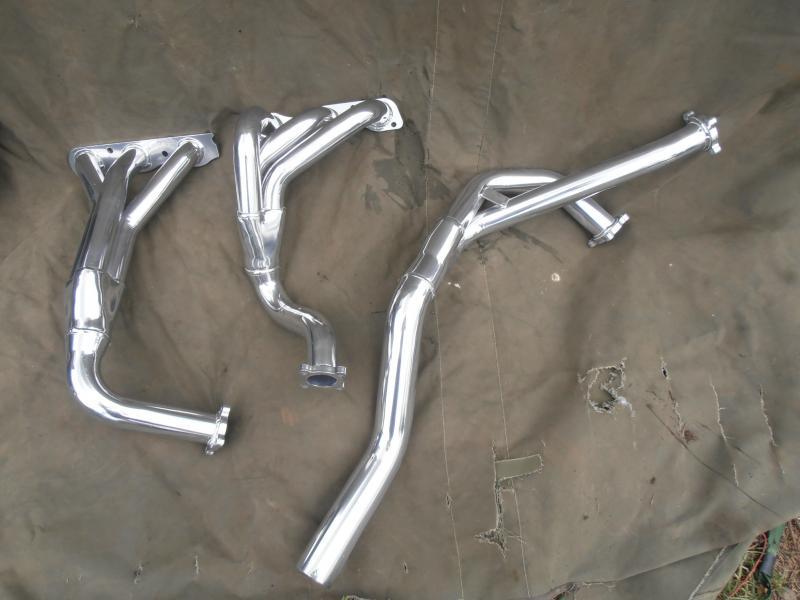
Most people find the engine lacking in power, but a member here (cookey) has recently been improving the performance of the vehicle using the original engine, he significantly improved the horse power and torque merely by fitting a properly designed extractor/header system (which he manufactures and sells) and is now working on porting the inlet and exhaust sides of the engine. (2.6 Engine Improvements, 2.6 Engine Improvements and 2.6 Engine Improvements)
He also sells disk brake conversions that can be fitted to both front and rear wheels without having to change the wheels. (Series disc brake conversion --- I did it my way)
If you're looking to replace the front door tops, I'd avoid the original leaky ones that rust and go for the made in the US "Rocky Mountain Products" door tops RMG010 http://www.parabolicsprings.com/products.html
Diana
You won't find me on: faceplant; Scipe; Infragam; LumpedIn; ShapCnat or Twitting. I'm just not that interesting.
 Swaggie
It's a Mod Plate.Originally Posted by Surf109

It tells what modifications were done to it whilst in service. I think the info is on REMLR somewhere.
Post it up on REMLR. Someone there will point you in the right direction.
Super Moderator
There were two reasons for the LPG conversions in Oz, firstly they pollute less and so are good for use in cities for things like taxis. However the main reason was that the LPG was originally excise (tax) free, so the cost of the fuel was about 1/3 the cost of petrol (gasoline). Excise is now being increased on LPG so the reason to convert is less cost efficient.
You won't find me on: faceplant; Scipe; Infragam; LumpedIn; ShapCnat or Twitting. I'm just not that interesting.
Fossicker
Okay I have more questions. So sorry in advance! You all have been so helpful.
Can anyone tell me what these switches do? I googled "blackout mode" and learned a bit about thats. Any ideas about the other three toggles?
Fossicker
And another ... what about this switch?
Fossicker
Thanks! I wish I could buy you a beer and pick your brain on this thing. Even within the LR community here this truck is a bit of an oddity.
 ForumSage
Subscriber
ForumSage
SubscriberSo Stone,
have you named the car yet?
I'd think there'd be a mob of options for an English designed Aussie built and in service car in the US!
Eg "bruce" ��
heres something to print and put on your shed wall!
http://www.remlr.com/documents/Adverts/adv1976_p3.jpg
Re the "mod" plate, they were fitted to vehicles and trailers and if a modification was deemed necessary
then it was givena number (this was done veh type by veh type as I understand it- eg no1 on a series 3 wont be same as no1 on a trailer)
When the mod was complete by workshops they defaced the corresponding number thereby marking it for quick check etc...
Anyway thats as i understand it, i believe these only started during s3 someone will pop in andcorrect me if I'm wrong I'm sure
(REMLR 235/MVCA 9) 80" -'49.(RUST), -'50 & '52. (53-parts) 88" -57 s1, -'63 -s2a -GS x 2-"Horrie"-112-769, "Vet"-112-429(-Vietnam-PRE 1ATF '65) ('66, s2a-as UN CIVPOL), Hans '73- s3 109" '56 s1 x2 77- s3 van (gone)& '12- 110
Super Moderator
Hi Stone
That panel has been modified. The two horizontally arranged switches are additional and likely for spot/driving lamps.
The other switch is usually for the map lamp on the passengers side.
The "stove" switch controls the military convoy lighting. There are two or three positions, depending on configuration.
- Off is normal civilian lighting.
- On is blackout which turns off the headlights, side lights and tail lights. and turns on the rear convoy lamps and blackout stop lamps (the two lamp fittings adjacent to each jerry can holder)
- There may also be a reduced lighting mode which turns on a pair of hooded slit lamp lamps on the front.
It is probably an engine immobiliser switch. Added by a civilian owner after service. In the Army they didn't have an ignition key.
The switch above the brake pedal is the black-out stop lamp switch.
To expand on Digger's information. The Army perodically issued Electrical & Mechanical Engineering Instruction (EMEI) for each each individual type of equipment, these are a bit like recall notices in the automotive industry.
Each EMEI related to only one equipment model and had an individual number. When a vehicle came in for service the mechanic would check for EMEI and when the task was complete would obliterate the relevant number on the mod plate.
Sometimes an EMEI cancelled the need for an earlier EMEI so some numbers would be ommitted because the later EMEI was done first.
Many of the EMEI are available on the REMLR website in the files section http://remlr.com/index_library.html.
Diana
You won't find me on: faceplant; Scipe; Infragam; LumpedIn; ShapCnat or Twitting. I'm just not that interesting.
 Posting Permissions
| Search AULRO.com ONLY! |
Search All the Web! |
|---|
|
AULRO.com Copyright 2001 - 2025 Independently Owned and Operated by Dave Blears Computing - DavecandoIT - AULRO.com LAND ROVER and its logo are the registered trademarks of Land Rover. Land Rover is not affiliated with AULRO.com. |
|





Bookmarks