Page 2 of 3 FirstFirst 123 LastLast
Results 11 to 20 of 21

Thread: Sparkologists - 240V generators and RCD protection

  1. #11
    Homestar's Avatar
    Homestar is offline Super Moderator & CA manager Subscriber
    Join Date
    Aug 2010
    Location
    Sunbury, VIC
    Posts
    20,105
    Total Downloaded
    0
    Quote Originally Posted by drivesafe View Post
    The new device called RVD, is the only device in the world that that can make isolated power supplies like generators and inverters safe and once fitted.
    Can you elaborate a bit more on these - I've never heard of them?

    Also wondering what makes generators unsafe as they are when protected by an RCD? I would have thought if they were inherently dangerous, then industry would not use them... There is no way that the building industry or the ETU would allow them on any site if there was any chance of injury from them. We run over 1,200 machines in our Business unit alone, and over 4,000 around the country, and we have never had an injury caused by one...

    I understand how an electric shock can be caused even with a functioning RCD, but that applies for a fixed supply as well as an isolated supply, so we can leave that out of the equation...

    Edit - I could only find an article from 2 years ago about these RVD's and a link that no longer exists???
    If you need to contact me please email homestarrunnerau@gmail.com - thanks - Gav.

  2. #12
    Join Date
    Jan 1970
    Location
    Yinnar South, Vic
    Posts
    9,943
    Total Downloaded
    0
    A generator on its own is a floating supply, not referenced to earth, so it has no potential to earth, meaning it cant kill you between its active supply and earth......active to neutral is still nasty, but an RCD does not protect you in household stuff from that either

    If you earth it, or its earthed to its body, its then referenced and there is potential to earth

  3. #13
    Join Date
    Jan 1970
    Location
    Yinnar South, Vic
    Posts
    9,943
    Total Downloaded
    0
    Just to add, the earthing system used, as opposed to a "floating" system, due to being such a large system, (the grid), multiple ground faults can become dangerous and hazardous for supply if there was no earthing system

  4. #14
    Join Date
    Dec 2006
    Location
    Torres Straits
    Posts
    3,502
    Total Downloaded
    0
    soooo
    In short is a safety switch a good idea?
    Not earthed as per matt?

    Ill read that links later

    S

  5. #15
    Join Date
    Feb 2005
    Location
    Bracken Ridge - Brisbane - QLD
    Posts
    14,276
    Total Downloaded
    0
    One of the electricians at work has a Honda 2 and he has wired in an RCD along with an hour meter permanently onto his machine. He uses it for extended camping on moreton island, the hour meter helps him service it every 100 hours. He clocks up the hours pretty quick.

    Although there is an earth tab on the machine there is no need to earth, he doesn't.

    He indicated the best reference doc out there is a NSW mining doc on generators. A power boad with RCD is fine

  6. #16
    Join Date
    Aug 2007
    Location
    Gosnells
    Posts
    6,148
    Total Downloaded
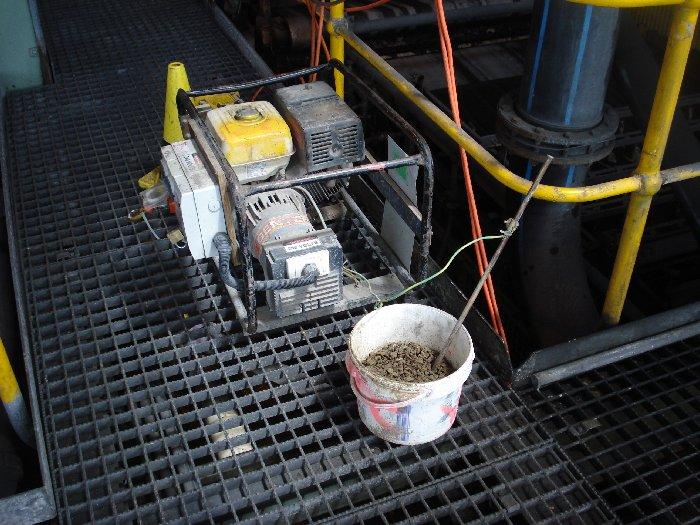
    0

  7. #17
    Join Date
    Jan 1970
    Location
    Queensland
    Posts
    7,907
    Total Downloaded
    0
    Hi Folks and first off I want to make something very VERY clear, I am NOT an electrician and have no intentions of passing out info relating to 240vac matters.

    This is how this new gear came about.

    Some 15 or so years ago, a woman was giving her young twins a bath.

    She lifted one of the twins from the bath and as she did, she bumped a hair dryer into the bath, electrocuting the other twin.

    This horrific event spurred a engineer into developing a safety device that would make such an event a thing of the passed.

    15 years later and the IFS is developed and is now patented world wide.

    Now to the next problem.

    I have nothing to do with domestic ( house ) wiring, I only work with generators and inverters.

    Generators and inverters are FLOATING electrical systems and are covered under AS/NZS 3001:2008

    These standards specifically cover Electrical installations in Transportable Structures and Vehicles.

    NOTE these standards are separate to the normal standards and those used in the Mining Industry.

    Now please don’t be offended but most electricians have no idea of how Floating systems have to be installed and by most, I mean the vast majority.

    So if you need some 240vac work done on a camper trailer, caravan or a motor home, you may find it vary hard to locate an electrician who actually knows the correct ( read legal ) way to carry out such installations.

    And this advice is based on some 20 years of working on motor home and caravans, and dealing with a large number of RV manufacturers.

    This following data is for a rough explanation and SHOULD NOT be used as a reference in any way.

    In a floating system, if an RCD is used, and installed correctly, you can only use one Class 1 device safely and legally.

    In a floating system, if an RVD is fitted, you can use as many Class 1 devices as you can power and they will all be safely protected and be legal.

  8. #18
    Join Date
    Feb 2005
    Location
    Bracken Ridge - Brisbane - QLD
    Posts
    14,276
    Total Downloaded
    0
    Hey tim, where do we find any recent info these RVD's..........

    I'm happy with the advice I have received from my electrician at work when I wired up my trailer......I couldn't imagine there would be anything too tricky in a mobile install

    Do you have example of incorrect installs in mobile equipment....would like to see how mine sits

    Cheers

  9. #19
    Join Date
    Jan 1970
    Location
    Queensland
    Posts
    7,907
    Total Downloaded
    0
    Quote Originally Posted by weeds View Post
    Do you have example of incorrect installs in mobile equipment
    Hi Kelvin and unfortunately there are plenty of BAD installations done all the time.

    A few years back I had an electrician contact me with an electrical problem with his mate’s NEW caravan.

    I explained to him I was not an electrician and could not give him any form of electrical advice.

    The problem his mate had was that when he bought his NEW caravan home, he set it up in his back yard and, luckily for him, he put down a rubber mat at the door so not to dirty his new caravan.

    He plugged his van into the mains and then as he went to climb into his van he got a tingling feeling as he touched the side of the caravan.

    The manufacturer had wired the active to earth in revers.

    Under the law, the electrician was obligated to notify the authorities and he did so.

    About a month later, I got a call from the electrician and he told me the Brisbane caravan manufacturer had to recall 4 other new vans they had wired the same way.

    As I posted above, being an electrician, even a VERY good one, does not mean they have ever worked with floating power supplies.

    I supply some of the largest RV manufacturers and some years back I got into a real knock down argument ( imagine, me arguing with anyone ) with an electrical engineer, employed by one of the largest motor home manufacturers.

    They thought they had done the right thing by employing an electrical engineer but this guy was a joke in the most dangerous way.

    I use Hager products and over the years have found them to back their products with very helpful technical support.

    On this occasion they were instrumental in putting this horses rear of an engineer in his place.

    While the incident is not that important it simply demonstrates that even when large companies try to do it right, they can come unstuck, so the average joe in the street is going to have a hell of a job getting it right.

    Now as I have stated, I try to keep out of 240vac threads but two devices have come onto the market that has allowed me to prepare a new kit to resolve a major problem confronting RVers.

    The problem, which is getting worse, is how to run a 3 way fridge and charge house batteries at the same time.

    I have never been a fan of DC/DC devices because of their high set up price for such a small potential gain ( if any ), and they do not address the 3 way fridge problem.

    I was told about the proposed introduction of the RVD a year or so back and this device would make a safe use of two other devices in a set up that would address the 3 way fridge/house battery charging in one go but would also have other uses for the devices when not powering the fridge and charging batteries while on the move.

    This is the only reason I have made it my business to study and test the RVDs in both inverters and generators.

  10. #20
    p38arover's Avatar
    p38arover is offline Major part of the heart and soul of AULRO.com
    Administrator
    I'm here to help you!
    Gold Subscriber
    Join Date
    Jan 1970
    Location
    Western Sydney
    Posts
    30,728
    Total Downloaded
    1.63 MB
    I'm surprised no one has already posted this answer to your question. It's really quite obvious!

    Ron B.
    VK2OTC

    2003 L322 Range Rover Vogue 4.4 V8 Auto
    2007 Yamaha XJR1300
    Previous: 1983, 1986 RRC; 1995, 1996 P38A; 1995 Disco1; 1984 V8 County 110; Series IIA


    RIP Bucko - Riding on Forever

Page 2 of 3 FirstFirst 123 LastLast

Bookmarks

Bookmarks

Posting Permissions

  • You may not post new threads
  • You may not post replies
  • You may not post attachments
  • You may not edit your posts
  •  
Search AULRO.com ONLY!
Search All the Web!