So to clarify, the FORD spec for puma (Tdci) with/without DPF is:
SAE 5W-30 engine oil (With DPF) -----> 5W/30 - WSS-M2C934-B
SAE 5W-30 engine oil (Without DPF) ----->5W/30 - WSS-M2C913-B or C (C is backwards compatible with 
The ford spec is different to the euro ACEA specs. Ford spec is just an endorsement of compatability. ACEA spec is the equivalent to the American API authority, although they use different grading systems.
From general consensus, Ideally the chosen oil should be a ACEA 'C1' spec oil (Low SAPS) for use with DPF, but not a concern for non-DPF vehicles, where a B series oil will do. SAPS is the Sulphated Ash, Phosphorus and Sulphur content- These were traditional lubricant additives in years past, but can cause issues with clogging/ damaging the DPF, hence on ACEA C class oils, this lubricity comes from other additives.
Interesting diagram below
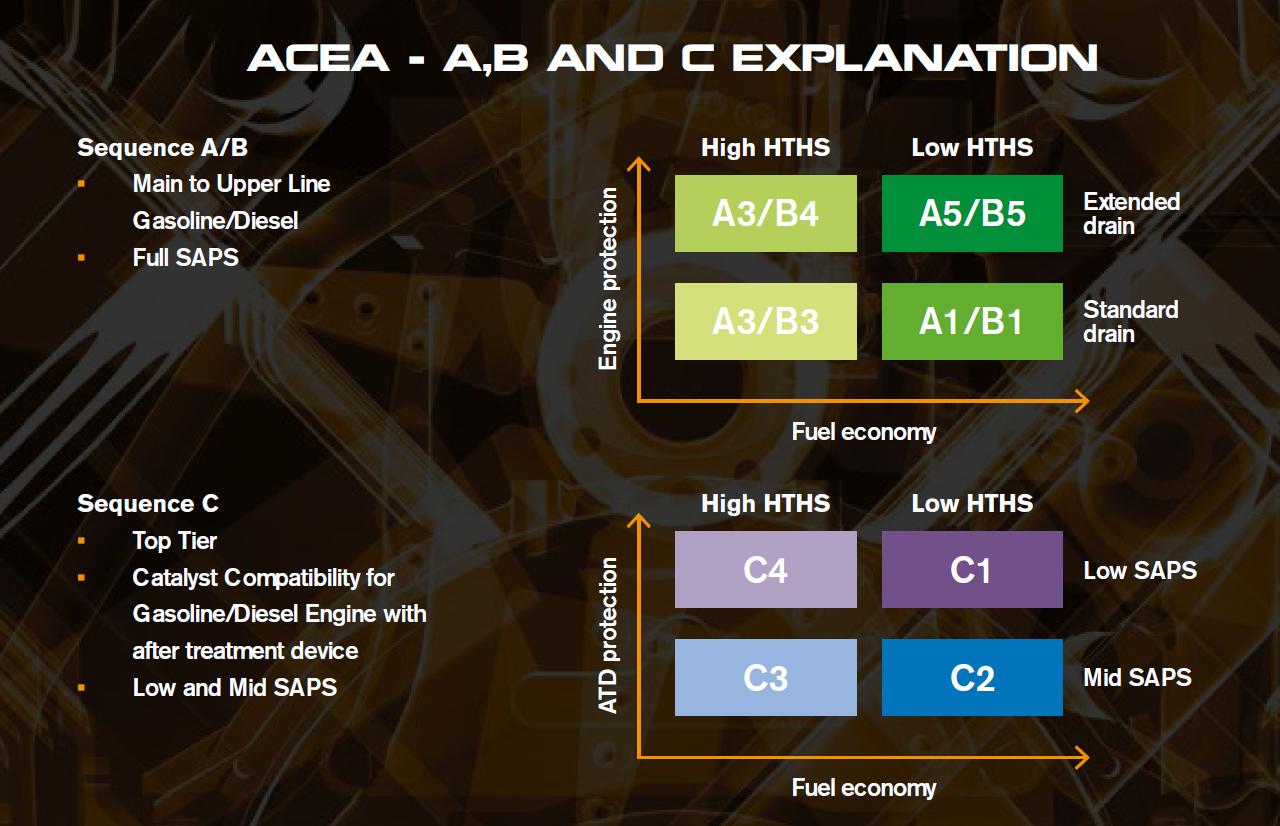
Sauce NB the Ax designator relates to petrol, Bx designates diesel. The C rating is for catalyst compatability.
Also of note, the HTHS (High Temperature, High Shear) viscosity.
This source states:
HTHS is a measure of how well oil protects in the toughest environments your engine creates- areas where the temperature is highest and the friction is the greatest. Lower HTHS viscosity generally means a thinner oil which can improve fuel economy by reducing the amount of horsepower required to pump it throughout the engine. But a lower HTHS viscosity also usually comes at the expense of wear protection.
I presume C1 is preferred (Low HTHS), as the euro diesel valvetrain, pump and other accessores would (I hope) require, and benefit from the viscosity profile of this grade.
As with anything relating to the ACEA standards, probably best to go to the ACEA Website with any specific queries.
-Mitch
'El Burro' 2012 Defender 90.


 Reply With Quote
Originally Posted by mrs

 . Pat
. Pat


Bookmarks